Domestic Revenue Mobilisation is becoming increasingly central to how countries finance development. As external financing becomes more constrained, many governments are placing greater emphasis on strengthening tax systems to fund public services and support the achievement of the Sustainable Development Goals.
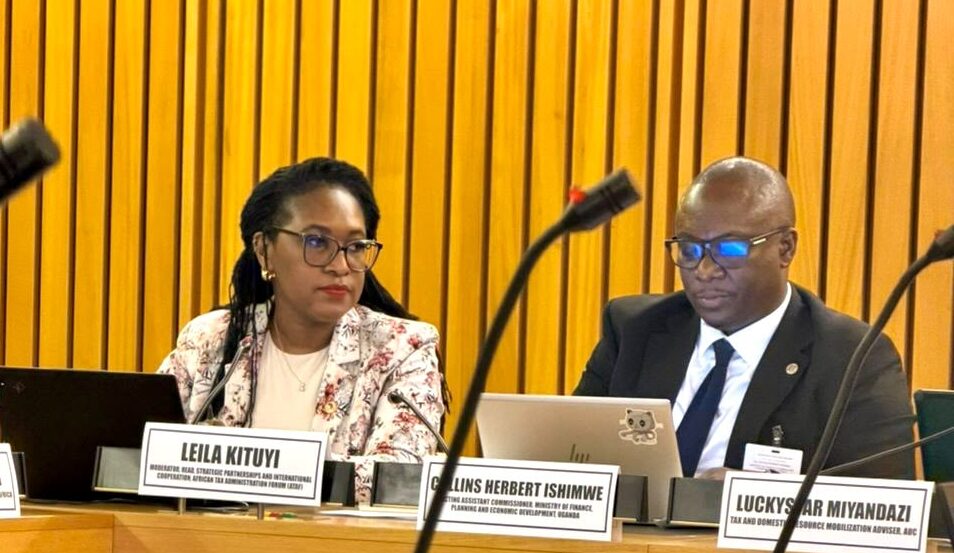
These issues were examined during the Policy Dialogue on Domestic Revenue Mobilisation: Progress and Challenges, hosted by UNU-WIDER (United Nations University World Institute for Development Economics Research), the OECD and the University of Manchester at the OECD Conference Centre in Paris.
Mr Ronald Waiswa, ATAF Research Expert, reflected on what practically drives tax compliance in African economies. He noted that compliance is shaped by three key forces: facilitation, enforcement, and trust. African tax administrations have made notable progress in facilitating compliance through simplified registration, filing, and payment systems, including the use of digital platforms and mobile payments. However, enforcement capacity remains limited, and public trust remains the most binding constraint.
Mr Waiswa observed that perceptions of corruption, unequal enforcement, and weak links between taxation and public service delivery continue to undermine tax morale in many countries. When citizens believe that tax laws are applied fairly, public resources are used responsibly, and everyone including the most powerful contributes their share, willingness to comply tends to increase. He emphasised that strengthening domestic revenue mobilisation therefore requires a whole-of-government approach, combining strong tax administration with credible public service delivery and accountability.
The dialogue brought together policymakers, researchers and development partners to exchange evidence and experiences on progress made in strengthening domestic revenue mobilisation, as well as the challenges many countries continue to face as they seek to expand domestic revenue bases.
Discussions highlighted that strengthening DRM ultimately requires a combination of sound policy design, capable tax administrations and a credible fiscal relationship between governments and citizens. Experiences shared during the dialogue reinforced the importance of aligning tax reforms with administrative capacity and public trust to ensure sustainable and effective revenue systems.