As businesses become more global and cross-border transactions increasingly complex, protecting the domestic tax base requires tax administrations to continuously strengthen their international tax capabilities.
For the Kenya Revenue Authority (KRA), this has meant investing in specialised expertise, strengthening transfer pricing rules, developing new policy and administrative frameworks, and preparing for emerging changes in the international tax landscape.
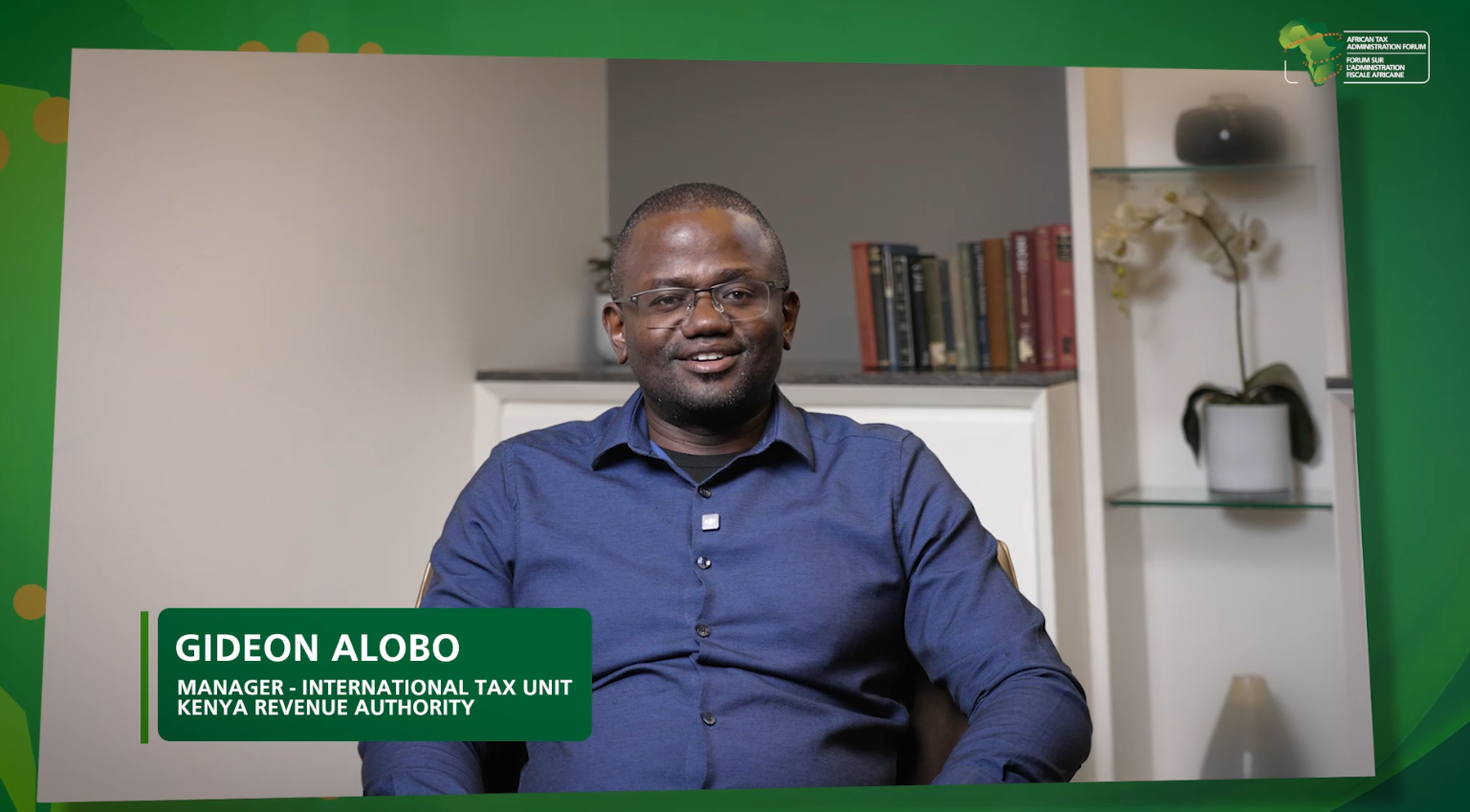
According to Gideon Alobo of KRA’s Large and Medium Taxpayers Department, International Tax Division, KRA’s progress in this area is also a story of sustained cooperation with the African Tax Administration Forum (ATAF).
“Right from the beginning when we started our transfer pricing unit, we’ve had support from ATAF,” Alobo says.
That early engagement supported KRA as it developed its transfer pricing capability and has evolved alongside the Authority’s international tax priorities. As the international tax environment has changed, the cooperation has expanded to include technical assistance, practical tools, specialised training and engagement with ATAF experts.
“We’ve really benefited from the tools that have been developed by ATAF through the technical committees and joint technical work,” Alobo explains.
More recently, this cooperation has extended to some of the emerging and increasingly complex areas of international taxation. ATAF provided technical assistance as Kenya advanced its work on the Qualified Domestic Minimum Top-up Tax (QDMTT), while KRA has also engaged closely with ATAF in developing its Advance Pricing Agreement (APA) framework.
For KRA, the value has not only been access to technical expertise, but also the opportunity to learn directly from the experiences of other African tax administrations.
Through ATAF workshops, technical programmes and peer-learning platforms, KRA officials have exchanged practical experiences with counterparts on issues ranging from commodity taxation to complex international tax matters. These have included engagements on the taxation of the coffee and tea sectors, as well as exchanges involving KRA, the South African Revenue Service (SARS) and the Namibia Revenue Agency (NamRA) on Advance Pricing Agreements.
“We have the kind of engagement that would benefit the Authority,” Alobo says.
This peer exchange is particularly important as African tax administrations increasingly confront similar challenges arising from cross-border business models and changes in international taxation. Rather than approaching these challenges individually, the cooperation provides space for administrations to learn from reforms already being tested elsewhere on the continent and adapt those lessons to their own circumstances.
For Alobo, this African dimension of the partnership is significant. Reflecting on KRA’s experience with ATAF, he invokes the words of an African writer:
“If lions had historians, the story of the hunt would stop glorifying the hunter.”
It is an analogy that captures a wider shift in African taxation: tax administrations are increasingly building their own expertise, sharing their own experiences and contributing to solutions shaped by the realities of African economies.
For KRA, that cooperation continues to strengthen the technical capacity, frameworks and peer networks needed to navigate an evolving international tax environment — and ultimately, to better protect Kenya’s tax base.
Watch the video to hear Gideon Alobo’s testimony on KRA’s experience working with ATAF.