When discussions turn to infrastructure, the focus is often on roads, bridges, ports, power plants and digital networks. Yet some of the most important infrastructure supporting Africa’s development ambitions is found not in concrete or steel, but in the skills, expertise and leadership of the people responsible for mobilising public revenue.
Tax systems do not function on policy alone. Tax laws do not collect revenue by themselves, nor do digital platforms automatically improve compliance. Behind every successful reform, audit programme, investigation and compliance initiative are trained professionals with the knowledge and expertise to turn policy into results. This human capital is often overlooked in discussions about domestic revenue mobilisation, yet it remains one of the most important determinants of whether tax administrations can respond effectively to increasingly complex economic and fiscal environments.
Why Human Capital Is a Critical Infrastructure
Infrastructure, properly understood, is defined not by its physical form but by its function. Economists describe infrastructure as the foundational stock of assets that enables other economic activity to take place: assets built through deliberate and sustained investment, delivering returns over long horizons, depreciating without maintenance, and generating benefits that extend well beyond those who directly use them. Judged against this definition, the professional capability of a revenue administration qualifies unambiguously.
Development economists increasingly distinguish between hard infrastructure, meaning the physical networks of transport, energy and telecommunications, and soft infrastructure, meaning the institutions, systems and human capabilities through which societies organise economic life. Courts, regulatory frameworks, financial systems and public administrations all fall within this second category. A capable tax administration is among the most consequential of these soft assets, for a simple reason: it is the infrastructure that finances all the others.
Human capital in tax administration displays every defining characteristic of infrastructure. It is built through deliberate investment over years rather than acquired overnight; an experienced transfer pricing auditor or exchange of information specialist represents a decade or more of accumulated training, mentoring and practical exposure. It depreciates without maintenance, as skills acquired even five years ago can be rendered obsolete by new business models, new technologies and new avoidance schemes. It generates returns far beyond the individual, since a single skilled auditor can protect revenues many multiples of the cost of their development, and the knowledge they transfer to colleagues compounds across the institution. And, like a road or a power grid, its absence is a binding constraint: where the capability does not exist, the revenue simply cannot be mobilised, however sound the legislation on the books.
From Human Resources to Human Capital
Recognising people as infrastructure requires a shift in how administrations think about their workforce, because human resources and human capital are not the same thing. Human resources describes the people an organisation employs: the headcount, the payroll, the organogram. Human capital describes what those people are collectively able to do: the stock of knowledge, skills, judgement and experience they can deploy in service of the institution’s mandate. Every tax administration has human resources. Not every tax administration has converted them into human capital.
That conversion is a deliberate, managed process. It requires structured learning pathways rather than ad hoc training; competency frameworks that define the skills each function demands; leadership pipelines that prepare the next generation of managers before they are needed; knowledge management systems that retain institutional expertise when individuals move on; and career structures capable of attracting and retaining scarce specialist talent in a competitive market. It also requires measurement, so that development effort is directed to where the capability gaps are largest and the revenue consequences greatest. Administrations that make this shift stop treating training budgets as discretionary expenditure to be cut in difficult years, and start treating them as capital investment, with the planning, protection and performance monitoring that capital investment demands.
ATAF’s Investment in Africa’s Human Infrastructure
This is precisely where the work of the African Tax Administration Forum (ATAF) makes its contribution. Across Africa, tax administrations are operating in a rapidly evolving landscape. Digitalisation, cross border transactions, illicit financial flows, sophisticated tax avoidance schemes and emerging technologies are reshaping the way revenue authorities work. Keeping pace with these developments requires continuous investment in people. Auditors, investigators, tax policy specialists, compliance officers, exchange of information practitioners and tax leaders must constantly develop new skills to address challenges that did not exist a decade ago.
According to ATAF’s 2025 Annual Report, African tax administrations continue to place increasing emphasis on professional development and specialised technical expertise. In 2025 alone, ATAF delivered 23 specialised training programmes through the ATAF Tax Academy, reaching 2,433 tax officials from 43 countries, and provided technical assistance support to 35 member countries. This scale has been sustained over years: 2,214 officials were trained in 2024, 2,053 in 2023 and 2,054 in 2022, drawn from more than 40 countries each year.
The quality of this investment is measured, and the evidence is consistent. Participant surveys reported in ATAF’s annual reports have recorded satisfaction and relevance ratings above 90% in every year over the past five years. In 2021, 98% of participants found ATAF’s training useful. In 2022, 91% rated the offerings as very relevant to their needs, while 99% of technical assistance participants expressed satisfaction with the support received. In 2023, 99% of respondents affirmed the relevance of the training, 93% expressed satisfaction with the programmes, and 96% confirmed that the training enhanced their technical capacity.
More telling still is what the surveys reveal about application, the point at which training becomes infrastructure. In 2024, 88% of participants applied the knowledge and skills gained from ATAF training in their jobs, and 82% recorded improvements in job performance as a result. By 2025, 91% of participants reported that the training enhanced their effectiveness in their professional roles, 95% cascaded the knowledge and skills acquired to colleagues and partner institutions, 86% continued using the training materials in their daily work, and 77% observed tangible changes in their department’s or institution’s practices, policies, procedures or systems. That last figure deserves emphasis: three in four training interventions are producing not just better individuals but changed institutions, which is precisely the compounding effect that distinguishes infrastructure from expenditure. Increasingly, these initiatives are moving beyond traditional classroom training to focus on practical application, peer learning, problem solving and the development of skills that can be applied immediately within the workplace. The objective is no longer simply to transfer knowledge, but to strengthen the ability of officials to address real world tax administration challenges and deliver measurable results.
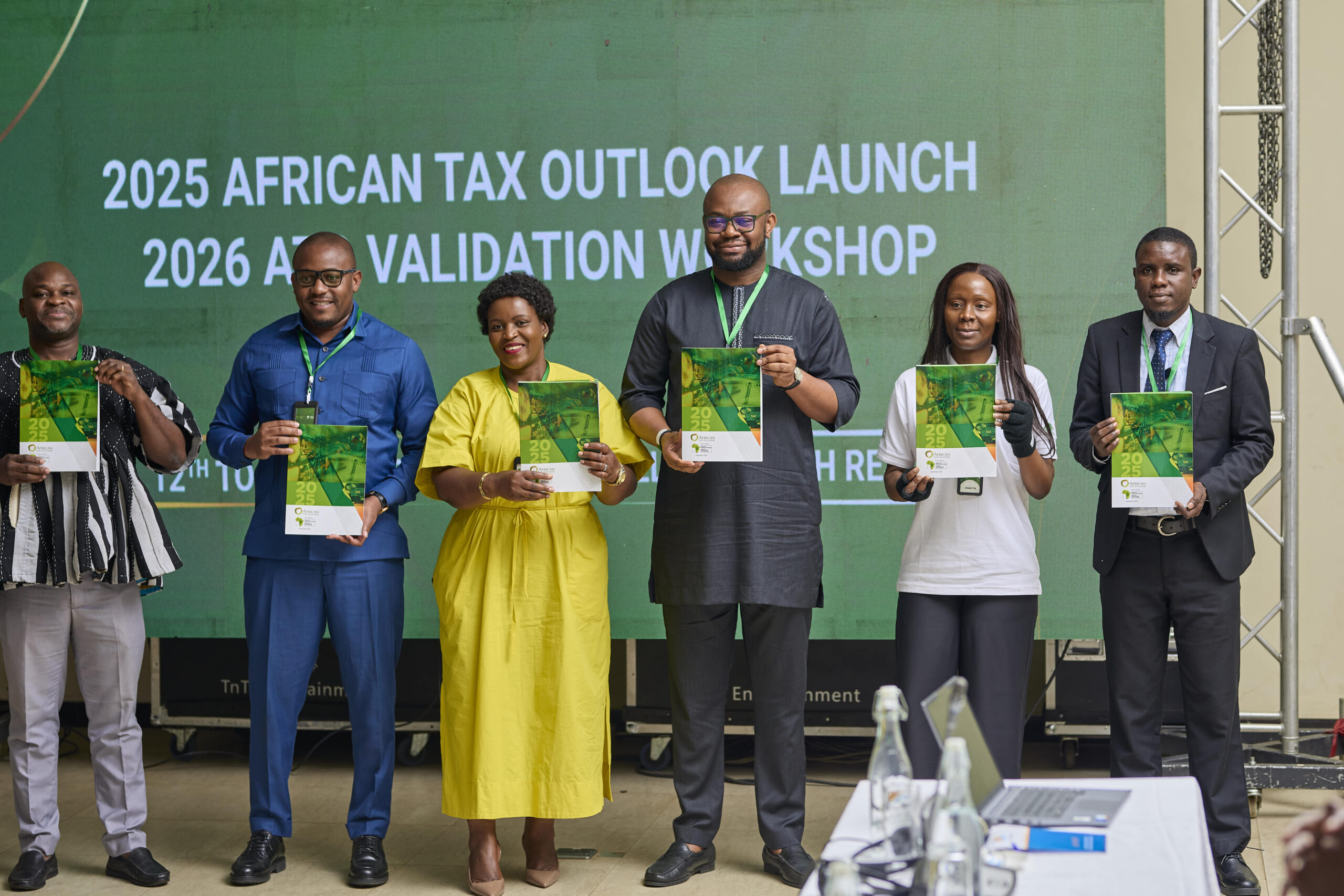
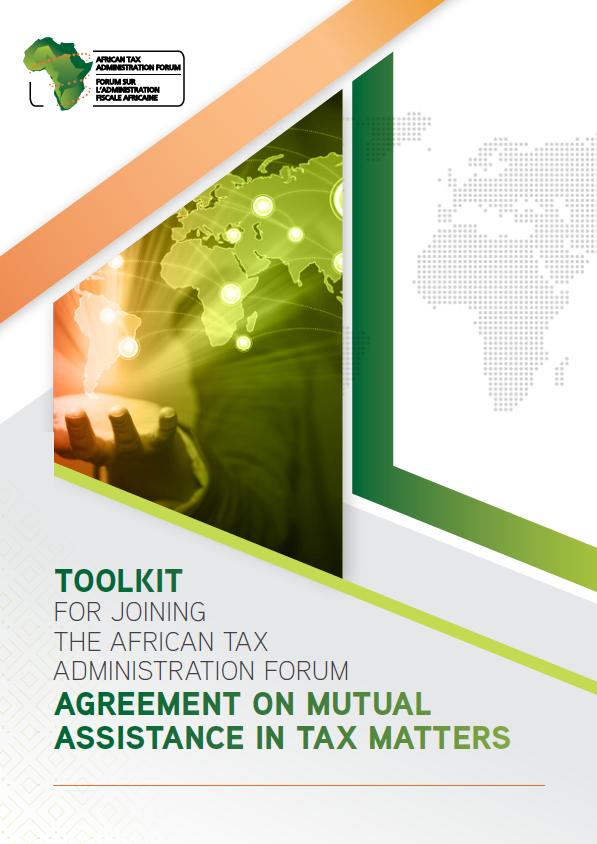
Training is only one channel through which this human infrastructure is built. ATAF’s publications programme performs a complementary function, codifying African expertise so that it can be shared, applied and preserved across the continent. Technical guides, Suggested Approaches to drafting tax legislation, toolkits on transfer pricing and exchange of information, the annual African Tax Outlook, and research produced through the African Tax Research Network together form a growing body of knowledge developed by Africans, for African realities. Where training builds capability in individuals, publications institutionalise it, ensuring that hard won expertise does not leave the administration when an official does, and that officials in one country can draw on the accumulated experience of forty three others.
The Return on Human Infrastructure
The return on this investment is becoming increasingly evident. In 2025, ATAF’s capacity building and technical assistance interventions across its member countries contributed to more than USD 685.8 million in additional revenue collections and USD 907.8 million in additional tax assessments. These results form part of a broader trend. Since 2016, ATAF supported interventions have contributed to more than USD 6 billion in tax assessments and USD 2.8 billion in revenue collections across Africa, demonstrating how investments in people translate into stronger revenue performance and more resilient tax administrations.
The impact of these investments is not measured by the number of workshops delivered or certificates awarded. It is measured by what happens when officials return to their administrations and apply new skills to real world challenges. Auditors identify previously undetected risks. Investigators uncover hidden assets and illicit financial flows. Specialists make greater use of exchange of information mechanisms and beneficial ownership data. Compliance officers strengthen risk management approaches and improve taxpayer engagement. Over time, these individual capabilities contribute to stronger institutions and more effective revenue systems.
Leadership development is equally important. Modern tax administrations operate in environments characterised by rapid technological change, growing taxpayer expectations, and increasing demands for accountability and transparency. Navigating these realities requires leaders who can manage change, inspire teams, promote innovation and guide institutions through complex reforms. Building such leadership capacity is therefore as important as strengthening technical expertise, and it is why executive and leadership programmes now sit alongside technical courses in the ATAF Tax Academy’s offering.
Looking Ahead
The importance of human capital in tax administration is only likely to increase. Artificial intelligence, advanced data analytics, digital assets and new forms of economic activity are transforming the global tax landscape. The ability of tax administrations to adapt to these changes will depend not only on technology and legislation, but also on whether their people possess the skills required to understand and respond to them.
As governments and development partners continue investing in infrastructure to support economic growth and development, there is an opportunity to broaden how infrastructure is understood. Alongside investments in roads, energy and digital connectivity, there is a strong case for investing in the people who help finance these priorities through effective domestic revenue mobilisation. Capacity building should therefore be viewed not as a supporting activity, but as a strategic investment in the human infrastructure that underpins effective tax administration.
Roads connect markets. Power stations drive industry. Digital networks expand opportunity. But none of these can be financed sustainably without skilled professionals who can mobilise public revenue. As African countries continue strengthening domestic revenue mobilisation, investing in tax administration talent may prove to be one of the most important infrastructure investments of all.