1. Could you briefly introduce yourself and share the title and focus of your paper presented at the 10th ATRN Congress?
I am a Senior Lecturer at the University of Cape Town, where I convene the Masters programme specialising in South African taxation and co-convene the Masters programme specialising in international taxation and a course on Resource Revenue Law.
The title of my paper is : The legal and economic impacts of GloBE Pillar Two on Oil and Gas Mining in South Africa.
In my paper I examined the constitutionality of the Global Minimum Tax legislation introduced in South Africa from 1 January 2024. Furthermore, the paper demonstrated the adverse impact of GloBE Pillar Two on the NPV of Oil and Gas Mining Companies that hold South African Oil and Gas Rights. The paper also explored whether the Oil and Gas Mining Companies would have recourse to government to compensate for the adverse economic impact of GloBE Pillar Two under their fiscal stability agreements.
2. What motivated you to pursue this particular research topic, and how does it relate to Africa’s broader tax policy, administration and legislative challenges?
I have a steeped interest in the Extractive Industries, having worked in this environment for a State Owned Multinational in across 15 African countries. Africa is richly endowed with mineral and petroleum resources yet the continent often does not have the financial means, technology and technical know-how to explore for and develop these resources on its own. These non-renewable resources are the birth right of Africans. The mining of indigenous mineral and petroleum resources should benefit all stakeholders both current and future generations. Africa has suffered a colonial past but this does not need to be perpetuated going forward with its invitation of foreign direct investment to its Extractive Industries. My research topic aims to reach a balance of investor and host state interest by informing reform to the fiscal policy.
3. Could you summarise the key findings or insights from your study and explain why you believe they are important for policymakers, researchers, or tax administrations?
Policymakers and tax administrations need to consider both the legal and economic impacts of the inclusion of GloBE Pillar Two into their domestic tax legislation.
My study found that initial implementation of GloBE Pillar Two is constitutionally sound in South Africa but future changes to the GloBE rules and GloBE administrative guidance by the OECD may be challenged as invalid where these are automatic (extra-territorial) amendments to the domestic legislation. The research is important as it advocates for the ATAF suggested approach for the implementation of Qualifying Domestic Minimum Top-up Tax (QDMTT) instead of South Africa merely imputing GloBE Pillar Two into its domestic legislation by direct reference the GloBE rules and GloBE administrative guidance.
The GloBE rules are designed to ensure that large MNEs pay a minimum level of tax on the income arising in each country where they operate, with emphasis on preventing the BEPS risk of the artificial shifting of profits toward no or low tax jurisdictions . The assumption is that MNEs have no real substance in such jurisdictions. Tax incentives offered in South Africa such as tax uplifts on capital expenditure for Oil and Gas mining have the impact of lowering the effective tax rate on excess profits to below the global minimum tax. The Substance Based Income Exclusion (SBIE) at 5% of Tangible Assets and Payroll Costs is inadequate to shelter Oil and Gas mining from a top-up tax that will be paid as a QMDTT to the South African Revenue Service (SARS). My paper proposes that the Inclusive Framework, consider inclusion of the following to the GloBE rules: 1) increase the weighting of the SBIE, 2) make provision for excluding activities in high tax jurisdictions that offer tax incentives or preferential tax treatment to specific industries not associated with base erosion or 3) an extractive industries carve-out similar to that provided for investment companies in the MNE group.
4. How does your research contribute to ongoing debates or policy reforms in domestic resource mobilisation, tax administration, or fiscal policy in Africa?
My research examined GloBE Pillar Two’s impact on oil and gas mining in South Africa. It contributes to policy debates by highlighting the reduced need for harmful tax incentives in the Extractive Industries, demonstrated the potential for increased domestic resource mobilization, and explored the legal challenges for South Africa to effectively implement the complex global rules. The research also underscores considerations for implementation of GloBE Pillar Two for other African countries advocating for QDMTT as the minimum measure for adoption, to ensure that these reforms benefit African countries rather than exacerbating existing inequalities.
5. What unique data, methodology, or analytical approach did you apply in your study, and what lessons can other researchers learn from it?
Proper evaluation of fiscal regimes for extractive industries requires economic and financial analysis at the project level, and Fiscal Analysis of Resource Industries (FARI) is an analytical tool that allows such fiscal regime design and evaluation. The FARI framework has been primarily used in the IMF’s Fiscal Affairs Department’s advisory work on fiscal regime design: it supports calibration of fiscal parameters, sensitivity analysis, and international comparisons. An adaption of the FARI methodology was used to demonstrate the economic impact of GloBE Pillar Two on a South African oil and gas mining right.
6. The ATRN Congress brings together scholars, policymakers, and practitioners. How did presenting your work at ATRN help you refine your research and engage with peers?
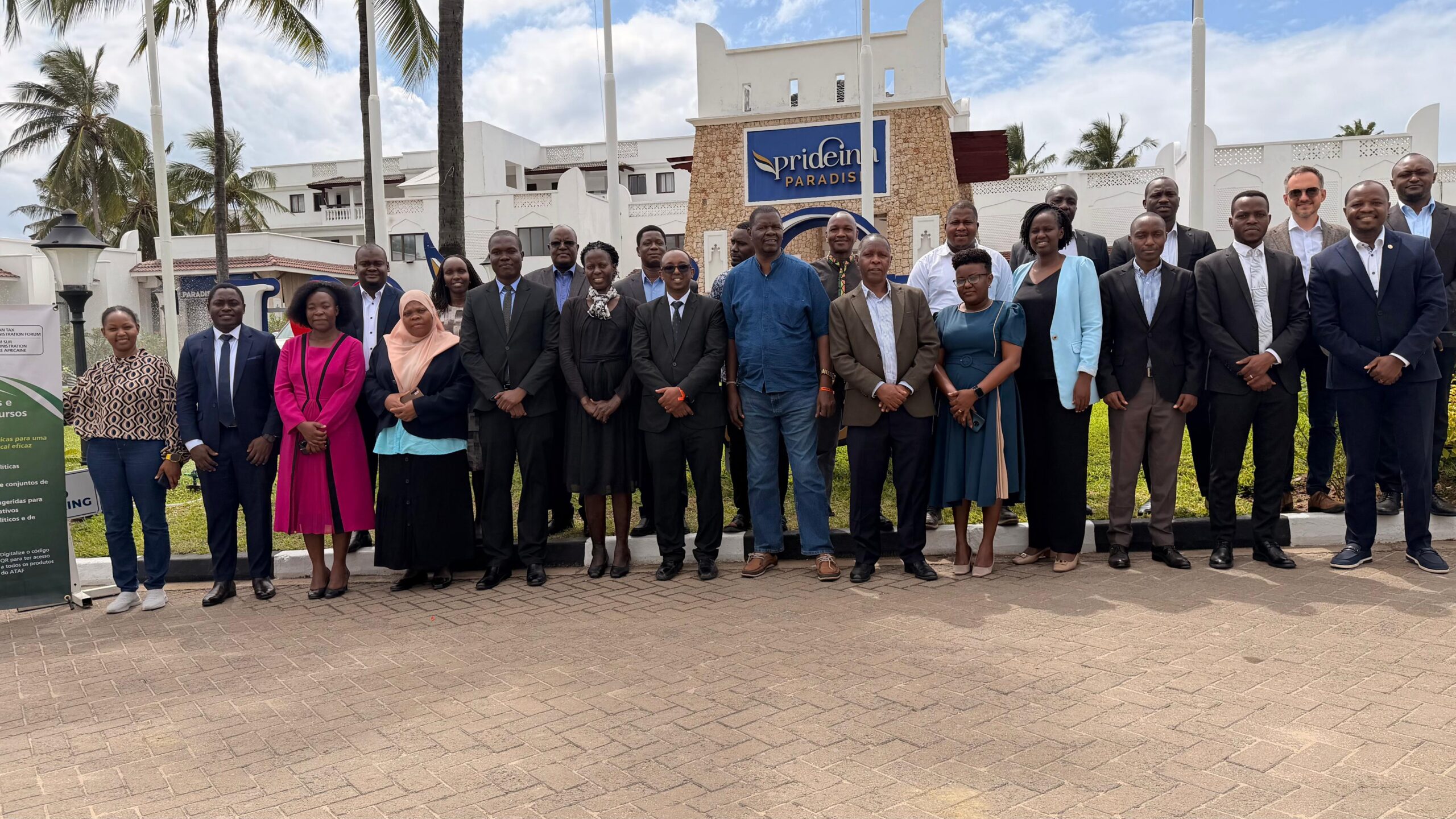
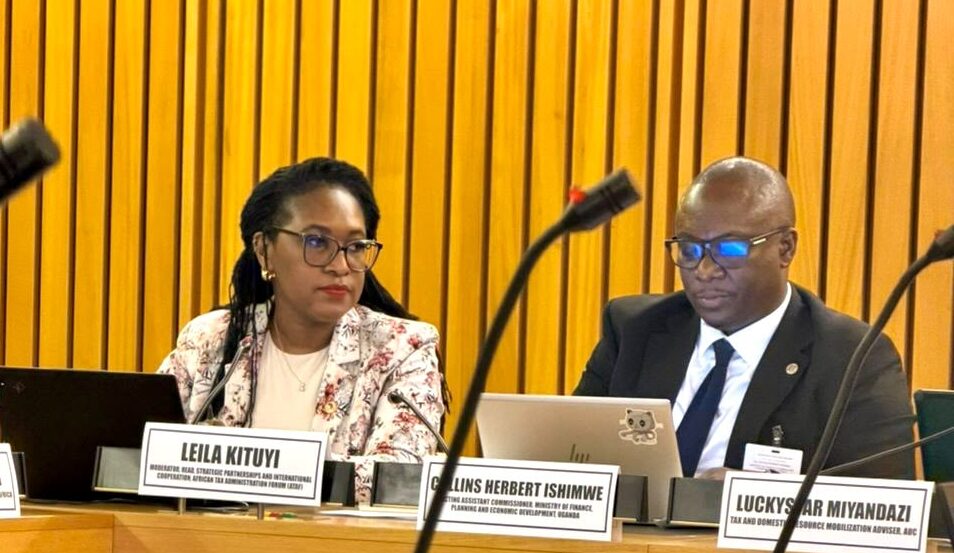
Presenting my research at ATRN gave me valuable insight into blind spots, omissions and potential basis in the presentation of my research outcomes. The questions from the esteemed audience were challenging and thought provoking. Their questions will deepen the inquiry that I conducted and help enhance the quality of the adaptation of my paper to a journal article. At the conference, I was able to network with academics, researchers, policymakers, and practitioners with whom I hope to collaborate with in future publications. I was delighted to meet so many kindred spirts who share a passion for international taxation, particularly as this field of specialisation has so few dedicated individuals that focus exclusively on tax research in an African context. It was phenomenal to see the number of attendees, who traveled throughout Africa to share so generously their experience and in-country knowledge of taxation.
7. Reflecting on your experience, how has ATRN (through its Congress, network, or the African Multidisciplinary Tax Journal) contributed to your career growth, visibility, or research impact?
As an emerging academic researcher, this being my third year in academia, the ATRN has contributed to my career growth through providing a platform for advancing research topics focused on African tax administration, fiscal policy and home grown solutions to enhance tax compliance and tax dispute resolution in African countries as well as training and awareness of the issues that African revenue authorities face. The opportunity to present at the 10th ATRN Annual Conference raised visibility of my research in respect to Extractive Industries and show-cased me as an expert that African policymakers and revenue authorities can engage to share data and practical knowledge of the Extractive Industries.
8. In what ways do you think ATRN is shaping Africa’s research landscape in taxation and fiscal policy, and how can it further strengthen its role?
The ATRN is shaping Africa’s research landscape by providing a platform for Africa-led, evidence-based tax research and fostering collaboration between scholars, policymakers, practitioners and revenue authorities, leading to improved domestic resource mobilization. The ATRN has strengthened its role by increasing the visibility and policy impact of its research, exemplified by global reach of the accreditation and indexing of the African Multidisciplinary Tax Journal’s (AMTJ) together with the ATAF Model Tax Convention, and by amplifying African voices in international tax discussions which will ultimately advise reform and implementation of effective tax systems and economic sovereignty. I believe that ATRN can further strengthen its role by developing research clusters using the profiles of its registered members to allow laser focus on the primary tax issues with which African’ policymakers and revenue authorities grapple. These research clusters will provide a base to which communications can be directed such as call for special edition articles, requests for training/presentations or to solicit assistance for African revenue authorities dealing with international tax disputes and contracting bi-lateral tax treaties/multilateral investment agreements.
9. What are your next steps for this research, for instance, publication plans, policy engagement, or collaboration and how do you see ATRN supporting that journey?
You can count on one hand the number of my publications. I hope that my research paper can be adapted to an article for the AMTJ, which will allow for a wide dissemination of the research outcomes. My desire is that my research might inform fiscal policy change with respect to possible adoption of GloBE Pillar Two in domestic legislation in African countries particularly in terms of the QDMTT as a means to safe guard the loss of the top up tax on profits from the mining of indigenous mineral and petroleum resources to other countries.
10. Finally, what message or advice would you give to emerging African researchers seeking to contribute to evidence-based tax policy and join platforms like ATRN?
Be brave. The calibre of the African researchers and quality of the presentations at the 10th ATRN Congress was intimidating. I anticipate also that the quality of articles published in the AMTJ will be of an exceptionally high standard. Do not be discouraged. I felt relieved that my paper had been excepted and empowered when I met a network of established researchers at the conference who can guide my research journey. I will grow in the depth of their experience and expertise. I finished the conference armed with a barrage of ideas based on the research presentations, inspired by discussions in the coffee and lunch breaks with ATAF members on their current research endeavors and feedback for improvements to my own research.
I would recommend to all emerging African researchers to join platforms like ATRN. The ATRN is not discriminatory and welcomes researchers across disciplines as vast as Economics and Econometrics, Law, Policy, Tax Administration, Political Science, Psychology and Human Behavioural Science, Linguistics, and Teaching and Learning of Taxation. The ATRN is an incubator for the next generation of tax specialists. Joining ATRN, gives you access to resources, training, data (even from partner organizations such as the African Development Bank Group and other international bodies) and guidance that will support your research and will make your publications meaningful and impactful in advising the direction of evidence-based tax policy formulation in Africa.